Renewal Season: The Clause-by-Clause Anatomy of an ICFHR 2022 Sponsorship Renegotiation
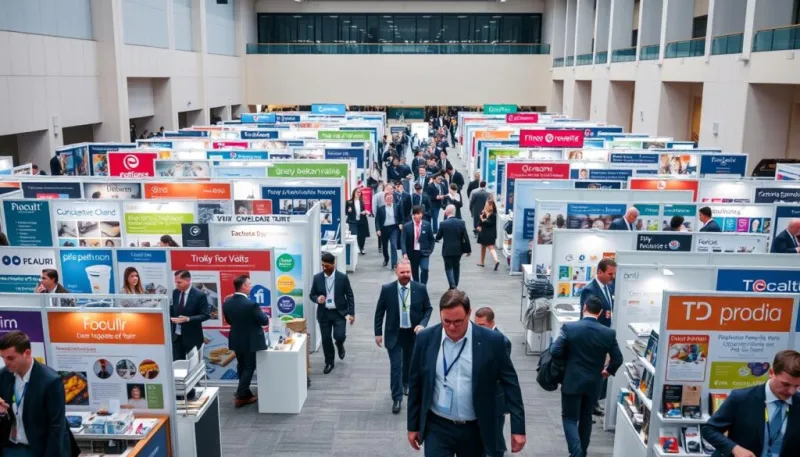
Photo: business professionals negotiating contract at conference booth, via www.espacoidealhub.com.br
When the sponsorship renewal email arrived at the Denver office of a mid-size talent analytics vendor — we'll call them Meridian Insights — in the spring of 2021, the number at the bottom looked routine. A modest uplift over their ICFHR 2022 Silver tier, consistent with prior years, payable in two installments.
What followed was an eleven-week negotiation that Meridian's marketing director, who agreed to speak on condition of anonymity, now describes as "the most instructive contract review of my career." Her account, corroborated by two event industry consultants familiar with conference sponsorship practices, offers US event marketers a rare look inside the fine print most exhibitors sign without reading.
The Lead-Quality Guarantee That Wasn't
Meridian's first sticking point was the conference's promise of "qualified buyer leads." The renewal agreement repeated the language from prior years, but Meridian's new general counsel flagged a problem: nothing in the contract defined qualified.
"We'd walked the 2022 expo floor with a badge scanner full of graduate students, competitors doing recon, and two people who told us they were there for the free chargers," the marketing director said. "The contract called that lead delivery. Technically, it was."
The negotiation produced what Meridian's counsel now calls a lead-quality rider: a defined minimum percentage of attendees holding talent acquisition, CHRO, or people-operations titles, with a partial fee credit if the post-event report fell short. Conferences rarely volunteer such terms, but — as the negotiation demonstrated — many will accept them when asked before signature rather than after.
Exclusivity and the Adjacent Booth Problem
The second dispute concerned category exclusivity. Meridian believed its tier granted protection from direct competitors on the exhibit floor. The conference's position: exclusivity applied only to named sponsors at the Gold level and above, and then only within a defined product category — language buried in an appendix Meridian had never received a copy of.
The compromise was geographic rather than categorical. Meridian secured a right of first refusal on adjacent booth placements and a commitment that no competitor would be positioned within two aisles. For a vendor whose demo relies on live screen capture, the two-aisle buffer mattered more than the contract language it replaced.
The Fine Print Checklist
Drawing on Meridian's experience and standard event-contract review practice, here is the audit checklist the company now applies to every conference renewal — and that US event marketers can adapt for their own renewal season:
- Define every deliverable numerically. "Lead generation" becomes "minimum 150 badge scans, 40% of which carry TA/HR leadership titles, verified in a post-event report delivered within 30 days."
- Demand the appendix. Ask for every exhibit schedule, floor plan, and term sheet incorporated by reference. If a document is referenced in the agreement, you are bound by it.
- Price the audiovisual and drayage line items. Meridian's effective sponsorship cost rose 22% once mandatory electrical service, lead retrieval licensing, and material handling were tallied. Negotiate those rates before committing to the tier, not after.
- Secure content rights explicitly. Session recordings, co-branded collateral, and attendee-list usage each carried separate licensing terms. Meridian negotiated perpetual rights to its own session recording — a term the original contract had implicitly granted to the conference instead.
- Build a cancellation ladder. Pandemic-era force majeure clauses taught exhibitors this lesson the hard way. Meridian's renewal now includes a sliding refund schedule tied to a conversion-to-virtual trigger.
- Set a measurement gate. The renewal includes a mid-cycle review: if year-one lead quality misses the defined floor, Meridian may downgrade tiers for year two without penalty.
Why This Matters Beyond One Contract
US firms spend billions annually on trade show and conference sponsorships, and post-2022 scrutiny of event ROI has only intensified. Yet most sponsorship agreements remain boilerplate drafted by — and for — the event organizer. The asymmetry persists largely because exhibitors negotiate once, every two or three years, while conference sales teams negotiate weekly.
Meridian's counsel put it plainly: "The conference wasn't acting in bad faith. They were acting according to the contract they wrote. The fix isn't distrust. It's literacy."
Renewal season rewards the exhibitor who reads the appendix, prices the line items, and asks for the rider before the signature — not the one who discovers the fine print on the exhibit floor, two aisles from a competitor.