Ninety Seconds to Win the Room: The Poster-Pitch Discipline Your Next Board Deck Is Missing
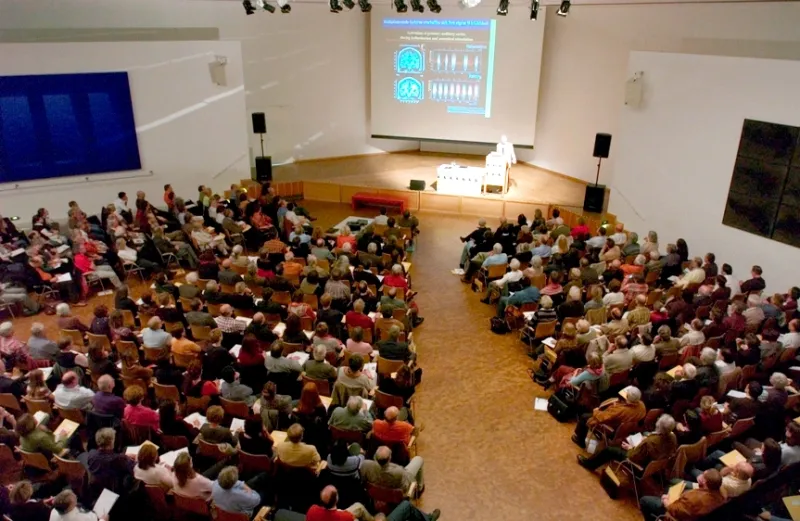
Photo: Oliver Potter, CC BY-SA 3.0, via Wikimedia Commons
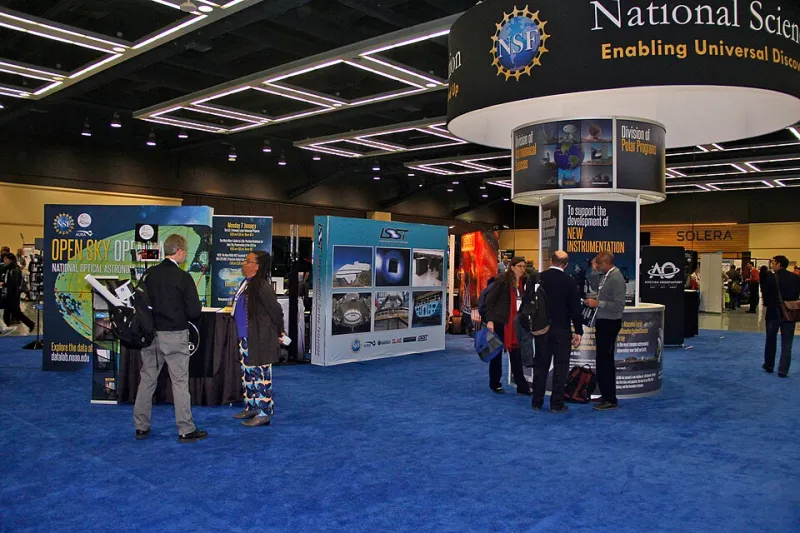
The poster hall at ICFHR 2022 was, by design, a hostile environment for presenters. Researchers stood beside their work while hundreds of attendees drifted past on the way to coffee, deciding within seconds whether to stop. Each presenter had ninety seconds on the clock to earn attention, deliver the core finding, and prompt a question. Most of them succeeded. Watching them work, it became difficult to ignore how much better the average researcher handled this moment than the average HR professional handles a fifteen-minute agenda slot with the CFO.
The comparison matters because the stakes are structurally identical. A scholar in that hall needed a committee member or a practitioner to stop walking. An HR business partner needs a vice president to stop scrolling email. Neither audience owes you their attention, and both will grant it based on the first sentence they hear.
What the Ninety-Second Format Actually Forced
The constraint at ICFHR 2022 was not a gimmick; it was a filter. Presenters who opened with methodology lost their audience before the second sentence. Those who opened with the finding — a number, a surprise, a cost — held it. The most effective pitches we observed followed a recognizable arc:
- The hook (10 seconds). A single claim, usually quantitative. One presenter opened with, "Turnover in my sample was driven by one thing nobody measures." Attendees stopped.
- The stakes (20 seconds). Who is affected and what it costs. Not the literature review — the consequence.
- The mechanism (40 seconds). How the finding works, stripped to its load-bearing logic.
- **The handoff (20 seconds)." An invitation: a question back to the listener, or a pointer to the one chart worth studying.
Notice what is absent. There is no background section. There is no "as you know." The format simply does not permit throat-clearing.
Translating the Arc to the Executive Pitch
American HR professionals routinely bring forty-slide decks to conversations that will be decided in the first two minutes. The poster-pitch discipline suggests a different preparation method. Before building the deck, write the ninety-second version. If you cannot state the finding, the cost, and the ask in ninety seconds, the deck is doing work the argument has not yet done.
Consider a budget request for a new learning program. The poster-pitch version is not a needs assessment. It is: "We lose $1.2 million a year to regretted attrition in our engineering group. The research on structured development paths says a targeted program recovers roughly a third of that. I need $180,000 and one quarter to prove it."
That is the hook, the stakes, the mechanism, and the ask — four sentences. Everything else in the meeting is defense, and defense only matters if the opening landed.
Three Habits Worth Stealing From the Hall
Lead with the number you would bet on. ICFHR presenters who hedged in their first sentence watched their audience drift mid-sentence. Executives behave the same way. Pick the figure with the strongest evidence behind it and put it first, even if it is imperfect. A defensible estimate stated early outperforms a precise estimate delivered in slide fourteen.
Rehearse the interruption. The best poster presenters treated questions not as derailments but as the actual product of the session. Build your pitch to provoke one predictable question, and have the answer ready with a visual. If you can predict what the CFO will ask, you can design the meeting around it.
Design for the passerby. Posters work because they can be understood at three distances: across the aisle, at arm's length, and up close. Your one-page summary should behave the same way — headline readable from across the room, key figures legible at a glance, detail available on demand.
The Cultural Argument for Brevity
There is a lingering belief in parts of the HR profession that thoroughness signals credibility — that a longer deck demonstrates more rigor. The ICFHR 2022 poster sessions made the opposite case in public, ninety seconds at a time. The researchers who earned hallway conversations, pilot partnerships, and citations were not the ones with the densest posters. They were the ones who respected the audience's time enough to earn the next five minutes.
American executives, conditioned by quarterly earnings calls and fifteen-minute calendar blocks, have already voted on this question. The ninety-second pitch is not a stylistic preference; it is the operating currency of the rooms where HR decisions get made. The scholars in that hall learned it out of necessity. Practitioners can learn it from them — or keep learning it the expensive way, from decks that never got past slide three.