After the Applause Faded: How ICFHR 2022's Keynote Recordings Found Their Real Audience
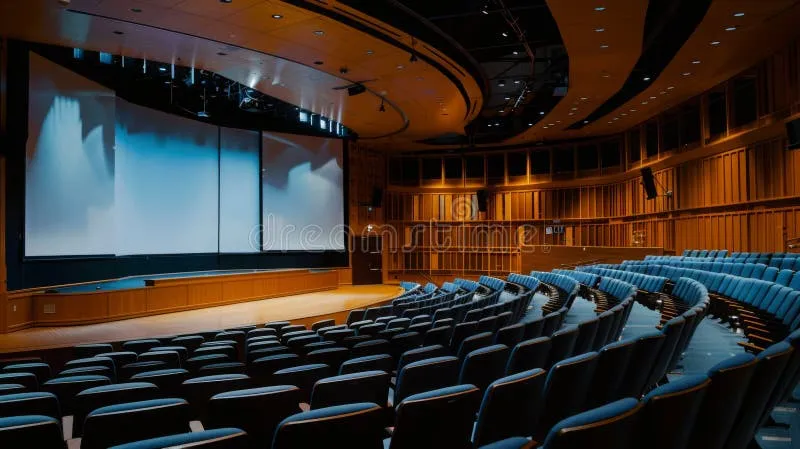
Photo: empty conference auditorium seats with video camera recording stage, via thumbs.dreamstime.com
When the final keynote of ICFHR 2022 wrapped, the organizing committee assumed the hard work was done. The slides would be archived, the proceedings published, and the recordings — well, the recordings were captured mostly out of obligation, a courtesy for registrants who missed a session. Nobody predicted what happened next.
In the three years since the conference closed, the keynote archive has quietly accumulated views at a pace no live session ever matched. The live audience numbered roughly 4,000. The recordings have been watched hundreds of thousands of times, and the viewer demographics tell a striking story: the overwhelming majority never set foot in the venue. They are HR business partners in Columbus, talent analysts in Dallas, CHROs in Atlanta — practitioners who consume conference research the way most Americans now consume everything else, on demand and on their own schedule.
The Archive Is the Product, Not the Souvenir
For decades, academic conferences treated video as an afterthought — a documentation exercise, not a deliverable. ICFHR 2022's data suggests that framing is obsolete. The live event functioned, in effect, as a expensive taping session; the recordings became the actual knowledge product, reaching an audience roughly fifty times larger than the ballroom ever held.
This inversion carries real implications for how conferences should be planned, funded, and evaluated. If the archive outlives the event by years and multiplies its reach by orders of magnitude, then production quality, indexing, and accessibility stop being nice-to-haves. They become the core value proposition. A keynote delivered brilliantly to 4,000 people but uploaded with poor audio and no chapter markers has, functionally, never happened for everyone else.
What the Viewing Data Actually Shows
The most instructive finding is not the volume of views but their distribution. The recordings did not accrue attention evenly. Three patterns stand out.
First, sessions with immediately actionable framing — titles containing words like "retention," "workforce planning," and "compensation" — drew sustained viewership long after publication, while purely theoretical talks spiked briefly and plateaued. US practitioners, it seems, arrive with a problem and search for a fix.
Second, the most-watched recording was not a keynote at all but a mid-tier breakout session on manager burnout, delivered by a then-unknown early-career researcher. The live audience for that talk was modest. The archive audience found it through search, shared it inside HR departments, and turned it into one of the conference's most-cited artifacts.
Third, viewership clustered in predictable ways around the American work calendar: surges in January planning season, dips during summer vacations, and a notable spike each fall as budget cycles forced talent leaders to justify headcount decisions with evidence.
Mining the Archive: A Practical Approach
For US HR professionals who never attended, the archive is a free, underused research library. A few tactics make it usable:
- Search titles, not speakers. The fame of a presenter correlates poorly with the durability of the content. The breakout sessions, not the keynotes, hold the most operationally relevant material.
- Watch at 1.5x, then rewatch the methods section. Practitioners routinely misapply findings by skipping the caveats. The two minutes a researcher spends on sample size and limitations is where most misinterpretation is prevented.
- Check the date against the labor market. Research presented in 2022 was conducted in a labor market defined by the Great Resignation and its aftermath. Some findings travel well; others are artifacts of a moment that has passed.
- Pair recordings with the published abstracts. The video gives you the argument; the abstract gives you the evidence. Practitioners who use only one tend to get the story half right.
A Modest Proposal for Conference Organizers
If archives are the real product, conferences owe them the same rigor they give the live program. That means recording every session, not just keynotes. It means publishing viewer-facing summaries and timestamps. And it means being honest about what the data reveals — including when the audience for an idea was always larger than the room, and when the room was the only audience an idea deserved.
The applause in the ballroom lasted a moment. The recordings are still working. American HR would be well served to treat them not as memorabilia, but as the primary text.