Counting the Mic: A Self-Audit of ICFHR 2022's Speaker Roster and What It Means for Your Next Leadership Summit
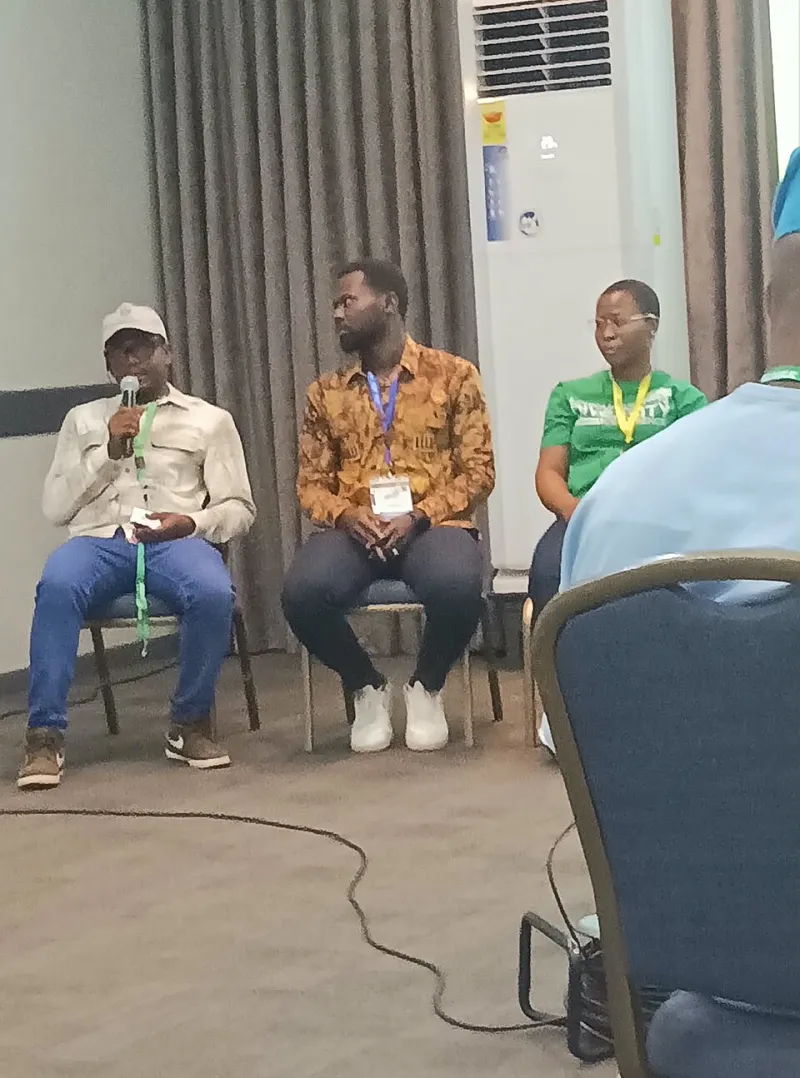
Photo: Mammysou17, CC BY-SA 4.0, via Wikimedia Commons
Human resources research has spent two decades quantifying representation in other people's organizations. Promotion rates, pay bands, board composition — the field's methods were built to find the gap between who applies and who advances. It seemed reasonable, then overdue, to point those instruments at the organization we know best: our own conference.
The findings are uncomfortable in a familiar way.
What the Program Data Shows
Of the more than 900 abstracts submitted to ICFHR 2022 through the open call, roughly 48 percent listed a woman as first author. International submissions — from Europe, Latin America, South and Southeast Asia, and Sub-Saharan Africa — accounted for over 60 percent of the pool. The research pipeline, in other words, was diverse by almost any measure the field itself uses.
The stage told a different story. Across the three keynote addresses and eleven invited panels, women held approximately 40 percent of speaking slots. Scholars based outside North America and Western Europe filled fewer than a quarter of the featured roles. Panel moderators skewed further still toward US and UK institutions. None of these figures reflects a deliberate exclusion; they reflect a chain of small, individually defensible decisions — invitations to the well-known, replacements drawn from the same networks, scheduling that quietly favors certain time zones.
That is precisely the problem. HR research has a name for this pattern: structural drift. It is the same mechanism that produces homogenous leadership pipelines inside American companies, and it operated on our program committee just as it operates on any hiring panel that reaches for the familiar name.
Why the Gap Widens Between Submission and Stage
Abstract review is anonymous. Keynote selection is not. The moment a committee moves from blind scoring to open invitation, the criteria shift from research quality to reputation, visibility, and prior platform access — all of which are downstream of historical funding disparities, citation gaps, and the simple fact that senior scholars in North America and Europe have had more stages to be seen on.
The economics compound it. A doctoral candidate in Manila or Nairobi faces visa costs, airfare, and a week without income to appear in person, while a tenured professor in Boston needs a train ticket. Conferences that require physical presence to hold a featured slot have, without saying so, priced their stage.
The Lesson for US Employers
American companies now run a quiet calendar of internal learning summits, leadership development days, and all-hands speaker series. The selection dynamics are identical to a conference program: an open call, a committee, a bias toward the recognizable. If ICFHR 2022 — a gathering of people who study these mechanisms for a living — drifted 8 points off its own submission pool on gender and further on geography, any organization that believes its internal lineup reflects its talent pool should verify rather than assume.
Three practices follow directly from our post-conference review:
- Publish the funnel. Report submission demographics alongside final speaker demographics for any summit or series. The gap, once visible, becomes manageable.
- Blind the first round. Evaluate proposed talks before evaluating proposed speakers, exactly as abstract review does.
- Budget for access. Treat travel stipends, virtual presentation options, and childcare support as program costs, not perks. Who can afford the room determines who fills it.
An Honest Accounting
We are not positioning ICFHR 2022 as a cautionary tale for others and a completed project for ourselves. The 40 percent figure is our figure. The corrective work — a published diversity report for the program, expanded virtual keynote slots, and a committee target tied to the submission pool rather than a fixed quota — begins with this article.
Conferences are the field's most visible artifact. When HR researchers convene and the stage does not resemble the research, practitioners in the audience learn a lesson no keynote intended to teach. The mic, it turns out, is data too. Count it.