Dead Zones and Full Conversations: Reconsidering ICFHR 2022's Connectivity Collapse
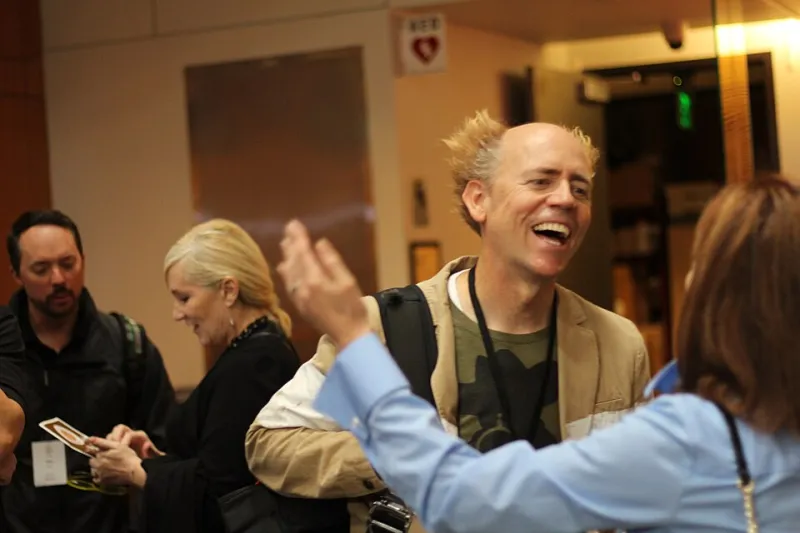
Photo: Cre8con, CC BY-SA 2.0, via Wikimedia Commons
Every conference produces a villain. At ICFHR 2022, it was the Wi-Fi.
The wireless network, procured late and provisioned for a fraction of the registered attendance, buckled almost immediately. The mobile app that promised live scheduling updates spent the opening morning spinning on a load screen. Session rooms in the convention center's lower level — quickly nicknamed "the bunkers" by attendees — dropped connections entirely. By day two, the event's official Twitter hashtag was equal parts complaint thread and comedy hour.
And yet. In the months since, something curious has happened in the retrospective conversations among attendees. The same people who vented loudest in 2022 now describe the outage, with only partial irony, as the thing that made the conference worth attending.
What Actually Happened in the Hallways
Talk to enough participants and a pattern emerges. Without functioning data connections, attendees could not retreat into email, could not check in with the office, could not perform the low-grade digital busyness that passes for presence at most professional gatherings. They had to talk to the person standing next to them.
One behavioral researcher presenting at the conference put it plainly in a hallway interview (conducted, fittingly, on a phone with no signal): ambient connectivity gives people permission to be elsewhere. Remove it, and attention has nowhere to hide.
This is not a novel insight. Cal Newport has built a bestselling career on a version of it. Sherry Turkle warned about alone-together dynamics more than a decade ago. But ICFHR 2022 offered something rarer than a thesis: a controlled, accidental, week-long demonstration with several thousand professional subjects.
The Practitioner's Dilemma
Here is where the editorial position gets uncomfortable. It is tempting to package the lesson as a design principle — build fewer outlets, throttle the bandwidth, engineer serendipity through scarcity. Some event planners have already done exactly that, marketing "unconference" formats and phone-free zones as premium features.
But HR professionals should be skeptical of romanticizing failure. The attendees who praised the dead zones chose to attend a conference. They had paid registration, arranged travel, and mentally committed to being away. An office worker whose employer throttles connectivity is not having serendipity imposed; they are having inconvenience imposed, and the distinction matters enormously.
There is also a labor question hiding under the nostalgia. The people raving about hallway conversations were, disproportionately, senior professionals for whom networking is optional enrichment. Early-career attendees, contingent workers, and anyone managing a crisis back at the office experienced the outage very differently — as a barrier, not a gift.
What US Workplaces Should Actually Take From It
The honest lesson is not that organizations should break their networks. It is that organizations should stop pretending connectivity and presence are the same thing.
Three practices follow from that:
First, audit for attention, not availability. Most American offices measure whether people are reachable. Almost none measure whether anyone can concentrate. A conference that accidentally removed distraction revealed how much of the standard office environment is built around interruption as a default.
Second, make disconnection voluntary and legitimate. The difference between the ICFHR dead zone and a hostile workplace is consent. Focus time, meeting-free blocks, and norms that let someone say "I'm offline for an hour" without penalty accomplish deliberately what the outage accomplished accidentally.
Third, stop over-indexing on tools. The most repeated finding from the conference's own research track was that the highest-value professional connections form through unplanned, low-bandwidth interaction. No collaboration platform replicates a hallway. Budget accordingly.
A Note of Humility
It would be easy to end on a tidy aphorism: the Wi-Fi failed, and we connected. But the more useful conclusion is messier. ICFHR 2022's technical collapse was a planning failure that happened to produce a favorable outcome for a particular group of people under particular conditions. The case for designing workplaces around forced disconnection is weak. The case for designing them around protected attention is overwhelming — and it does not require sabotaging anything.
The next conference will have excellent Wi-Fi. The attendees will be more reachable and, if the research holds, less present. US employers would do well to study both halves of that trade-off before their next lease renewal.