The Conference That Ran the Experiment on Itself: What ICFHR 2022's Format Gamble Reveals About Hybrid Everything
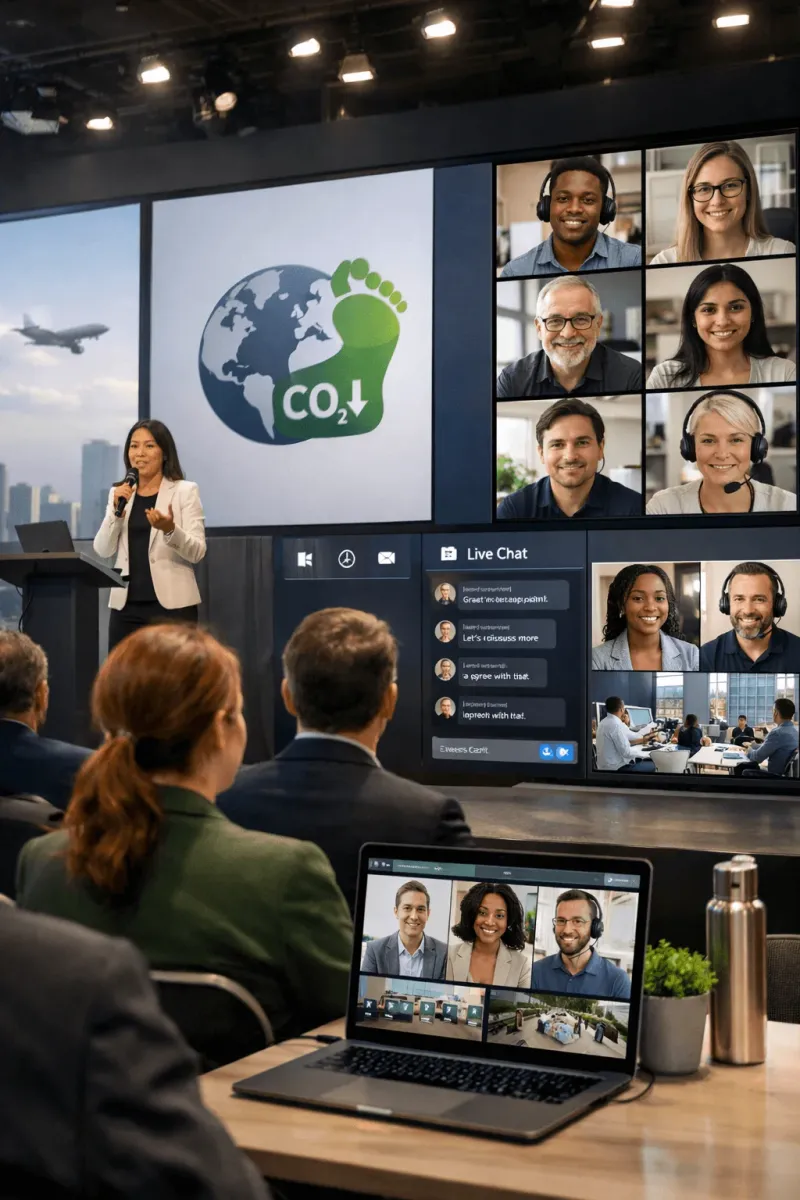
Photo: hybrid conference audience watching remote speaker on large screen, via mygarbagecollection.com
There is a particular irony in a conference about human resources stumbling through the same hybrid-work dilemmas as the organizations it studies. We should say this plainly: ICFHR 2022 ran an experiment on itself, the results were mixed, and the mixed results are the most useful thing the conference produced all year.
This is an opinion column, so let us stake a claim up front: the debate over whether large gatherings should be virtual, hybrid, or in-person is mostly a debate about the wrong question. ICFHR 2022's own experience suggests the right question is not which format but which purposes — and organizations that refuse to separate the two will keep designing events that disappoint everyone equally.
Three Formats, One Event
The organizing committee, led by program chair Dr. Elena Vasquez, made an unusual commitment: rather than choosing a single format, the conference ran three distinct tracks. A fully in-person core in Chicago, a synchronous virtual track with dedicated online sessions, and an asynchronous archive with moderated discussion boards that stayed open for thirty days.
"We stopped pretending hybrid meant one event with cameras in the back of the room," Vasquez told us in a retrospective interview. "A camera in a ballroom is not participation. It's surveillance with worse lighting."
The numbers tell an honest story. Virtual registration ran 40 percent above the committee's projection, drawing attendees from community colleges, small consulting shops, and public-sector HR offices — people who told us, repeatedly, that a traditional conference had never been financially feasible. But engagement metrics told a harder truth: virtual attendees were roughly half as likely to post questions, and the serendipitous hallway encounters that in-person attendees rated as the highlight of their week simply had no online equivalent, despite a well-executed matchmaking app.
What the Hallway Teaches That the Platform Can't
An attendee we'll call Marisol — a talent development manager at a midwestern manufacturer who asked that we use only her first name — put it in a way we haven't stopped thinking about. "I got my job's biggest idea not from a session but from a stranger in the coffee line who was complaining about the same problem I had. You cannot schedule that. But you can design for it."
Design for it. That phrase, we'd argue, is the actual takeaway. The in-person track succeeded not because co-location is magic but because the format made friction cheap — a two-minute conversation required no calendar invite, no Zoom link, no negotiation over whose calendar wins.
Meanwhile, the asynchronous archive quietly became the dark horse. Session recordings paired with structured discussion prompts drew steady traffic for weeks, particularly from international attendees in time zones the live schedule had never served. The lesson generalizes immediately to corporate training: the recording is not the leftover; for a third of your audience, it's the event.
What HR Leaders Should Steal
Strip away the academic context and three transferable principles remain for anyone planning a large internal event — a sales kickoff, a leadership summit, an annual training week:
First, separate the purposes. Information transfer works asynchronously, often better. Relationship formation requires co-location or at least synchronous small-group formats. Skill practice needs live interaction with feedback. ICFHR 2022 failed wherever it tried to make one format serve all three, and succeeded wherever it assigned each purpose to the format that fit.
Second, fund the virtual experience as a product, not a broadcast. The conference's dedicated online sessions — designed for remote participation from the start, not streamed as an afterthought — earned engagement scores within striking distance of in-person sessions. The camera-in-the-ballroom sessions did not. Your remote employees can tell the difference, and they remember it.
Third, measure what actually happened, not what the registration list implies. The committee's willingness to publish unflattering engagement data is, frankly, rarer than it should be in corporate L&D, where attendance reports routinely masquerade as impact reports.
The Uncomfortable Conclusion
Here is the opinion part we promised. The persistence of the "virtual, hybrid, or in-person" framing in US workplaces is not confusion — it's avoidance. Asking which format lets leaders postpone the harder question of what each gathering is actually for. ICFHR 2022 answered that question by accident, through trial and visible error, and did the field a service in the process.
The future of the academic conference, like the future of the corporate town hall and the all-hands and the annual training week, is not one thing. It is a portfolio, deliberately constructed, honestly measured, and revised every year based on evidence rather than nostalgia or fashion.
The organizations that figure this out first will not be the ones with the best technology. They'll be the ones willing to run the experiment on themselves — and to publish the results, even when the results are mixed.