Kosher Meals and Quiet Rooms: Grading ICFHR 2022 on the Hospitality Test American HR Keeps Failing
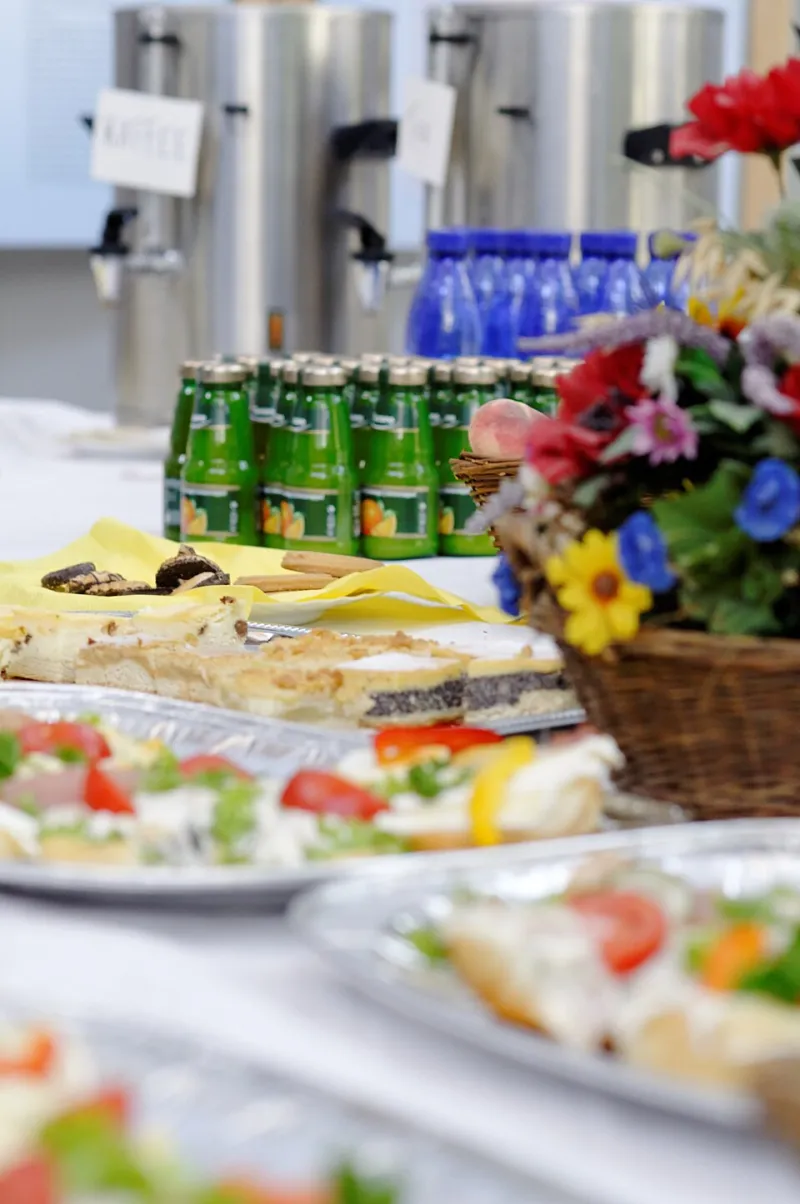
Photo: Rob Irgendwer, CC BY-SA 3.0, via Wikimedia Commons
There is a particular kind of honesty in conference catering. Nobody lobbies for the lunch spread the way they lobby for a keynote slot. Nobody drafts a strategic plan around whether halal options exist. Hospitality is what an organization does when it thinks nobody is grading — which is precisely why we should grade it.
ICFHR 2022 brought together human resources researchers and practitioners from more than forty countries. In doing so, it faced the same logistical test that American HR departments face every day, just compressed into one week and made visible to everyone at once. The results are instructive, occasionally uncomfortable, and worth a letter grade.
What the Record Shows
Based on registration materials, venue documentation, and post-event attendee surveys, ICFHR 2022 made measurable commitments in three areas.
Dietary accommodations. The registration form collected dietary requirements as a structured field rather than a free-text box — a small design decision with large consequences. Vegetarian, vegan, gluten-free, halal, and kosher options were available at every catered function, clearly labeled at the point of service. Attendees who requested kosher meals received sealed, certified meals rather than a "vegetarian plate as a substitute," a shortcut that has quietly humiliated more than one conference-goer in the US.
Prayer and contemplation space. The venue designated two rooms for prayer and quiet reflection across all five days, with posted schedules and, notably, no requirement to state a religious affiliation to use them. For a profession that publishes earnestly on religious accommodation under Title VII, actual physical provision remains rare. Most US workplaces handle the issue with a well-meaning shrug and an empty office.
Accessibility provisions. All general sessions offered live captioning. Step-free routes connected every session room, the poster hall, and the dining area. Service animal relief areas were mapped in the printed program — a detail that sounds trivial until you have watched an attendee wander a convention center for twenty minutes looking for one.
The Gaps
An honest grade requires the debit column too.
Captioning was live but not always accurate for technical terminology, and no sessions offered American Sign Language interpretation on request in advance — a standard that many large US conferences, including SHRM Annual, now meet. Dietary labeling was thorough, but the lunch line itself funneled several hundred people through a single corridor during peak hours, which effectively excluded attendees with mobility limitations from the informal networking that happens in line. And nursing facilities — a room with a lock, a refrigerator, and a comfortable chair — were not provided at all, an omission that would draw scrutiny at any US employer with more than fifty employees under the PUMP Act.
That last gap is the one that should sting. A conference about human resources, in 2022, without a lactation room, is a reminder that the study of work lags the law of work more often than either side of the field likes to admit.
The Benchmark Problem
Here is where the American context matters. US HR professionals operate under a patchwork of legal floors: reasonable accommodation under the ADA, religious accommodation under Title VII as strengthened in Groff v. DeJoy, lactation space under the PUMP Act. Legal compliance, however, sets a low bar — it tells you what you must do for someone who asks, not what an organization does by default.
ICFHR 2022's strongest feature was default behavior. Dietary options did not require a special request. Quiet rooms did not require a justification. The conference treated inclusion as infrastructure rather than exception handling. That is the cultural standard American workplaces have largely not reached: the difference between accommodating the employee who advocates for herself and building a workplace where advocacy is unnecessary.
The Grade
On balance: B+.
The deduction is not for what ICFHR 2022 got wrong in 2022. It is for the asymmetry the exercise exposes. The field can produce a rigorous longitudinal study of religious accommodation in Fortune 500 firms while failing to put a refrigerator in a quiet room at its own flagship event. Practitioners should not feel superior to the researchers — most US employers would score lower on the same rubric.
The practical takeaway for a US audience is a simple audit. Look at your next all-hands, your holiday party, your hybrid meeting schedule. Who had to ask? Who stayed home? The lunch badge ledger, as it were, never lies. It just waits for someone to read it.