Seven People-Analytics Platforms That Dominated the ICFHR 2022 Exhibit Floor — An Honest Scorecard

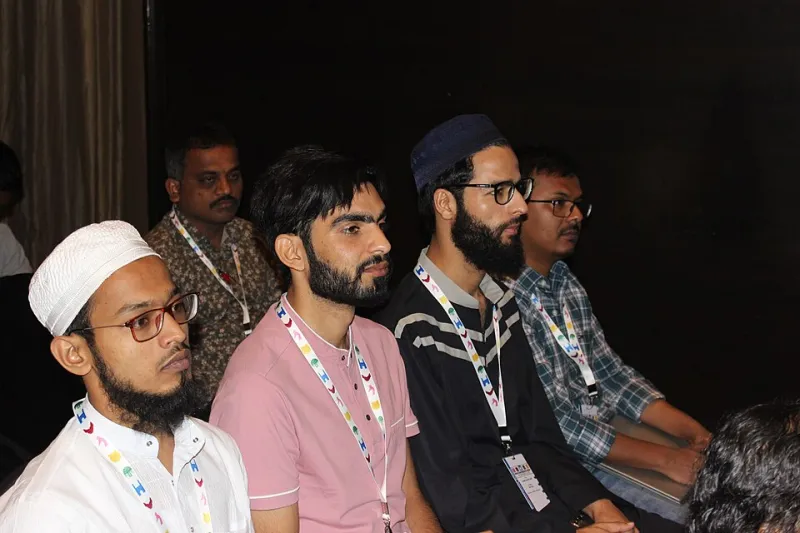
Photo: 攝眼睛, CC BY 2.0, via Wikimedia Commons
Every conference has a gravitational center, and at ICFHR 2022 it was the exhibit hall. Vendors of people-analytics and assessment technology booked more floor space than any previous edition of the conference, and the demos drew the kind of crowds keynotes usually reserve for themselves. For US mid-market HR leaders — the audience most vendors claim to serve and few actually price for — the challenge was separating defensible science from dashboard theater.
We visited every major booth, sat through the standard demo, and asked the same three questions: How long does implementation actually take? What does a 500-employee deployment cost? And can the vendor show peer-reviewed validation for its core claims? The scorecard below reflects those conversations. Scores are out of five.
1. The Attrition Prediction Platforms
Two vendors dominated this category, and both delivered polished predictive models for voluntary turnover. The stronger of the pair (score: 4.5) backed its model with published validation studies and offered transparent feature-importance reporting. The weaker (3.0) relied on a proprietary accuracy claim that no presenter could explain when pressed. Usability was comparable; the difference was entirely evidentiary. Verdict: worth piloting the validated option; skip the rest.
2. Skills Inference Engines
Skills-mapping tools were the loudest category on the floor. The leading demo (4.0) inferred capability profiles from internal project data and integrated cleanly with two major US HRIS platforms. Pricing was the sticking point: quotes for mid-market deployments started near six figures annually. A smaller competitor (3.5) offered 70 percent of the functionality at roughly a third of the cost, with a rougher interface. Verdict: enterprise pricing has not yet adjusted to mid-market reality. Negotiate hard or wait a cycle.
3. Employee Listening and Sentiment Tools
The survey-and-sentiment category has matured considerably. One platform (4.5) stood out for its natural-language analysis of open-ended responses, which surfaced themes that manual coding typically misses. Its evidence base is thinner than its marketing suggests — internal case studies rather than independent research — but the underlying methodology is sound. Verdict: a reasonable buy for organizations still running annual surveys in spreadsheets.
4. Structured Interview and Assessment Suites
Assessment vendors brought the strongest science to the conference, as they historically have. The standout (5.0) presented validation data matching I-O psychology standards and demonstrated adverse-impact monitoring built directly into the reporting layer — a feature that matters enormously for US employers navigating EEOC scrutiny. Cost is moderate and implementation was quoted at under eight weeks. Verdict: if you buy one thing from this conference's floor, the evidence says it should be structured assessment.
5. Compensation Benchmarking Dashboards
Two pay-equity and benchmarking platforms showed well. Both handle the multi-state pay data that US mid-market firms juggle, but only one (4.0) offered audit-ready reporting aligned with emerging state disclosure requirements. The other (3.0) felt like a visualization layer without the compliance substance beneath it. Verdict: choose based on your state footprint, not your design preferences.
6. Workforce Planning Simulators
The most ambitious demos — scenario modeling for headcount, attrition, and restructuring — were also the least mature. The best of the category (3.0) produced plausible projections but required data hygiene most mid-market organizations do not yet have. Verdict: promising, premature. Revisit in 2023.
7. Manager Coaching Assistants
A late-breaking category: tools that nudge managers based on team signals. One entrant (3.5) showed genuine promise with a privacy-respecting design, but the category as a whole lacks any independent validation. Verdict: watch, don't buy.
The Bottom Line
The ICFHR 2022 floor confirmed that people analytics has crossed from novelty to procurement category. It also confirmed that evidence quality varies wildly. For US mid-market buyers, the discipline that pays off is simple: demand validation research, demand total cost of ownership, and never confuse a beautiful dashboard with a defensible model.